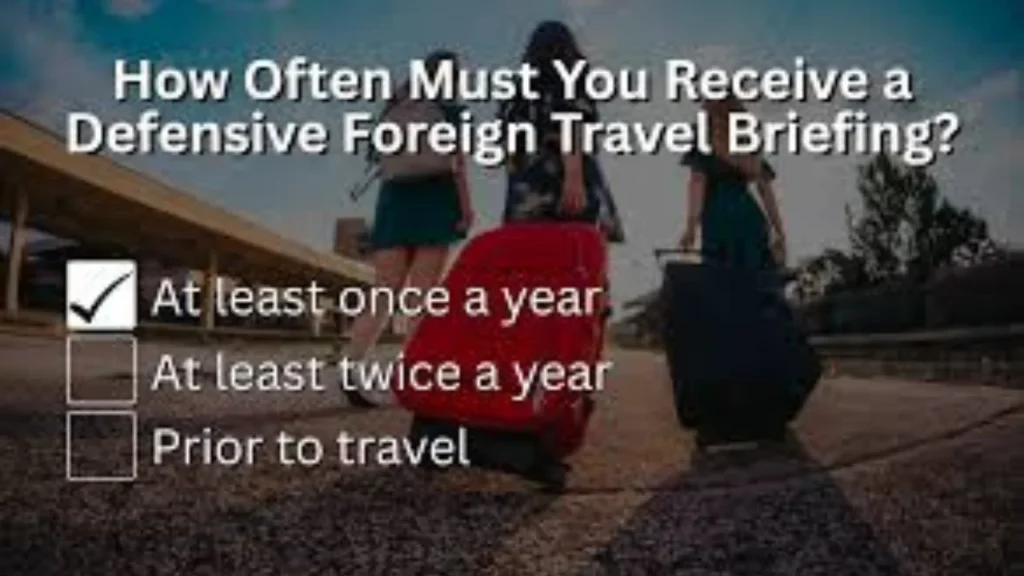
Planning international travel requires more than booking flights or packing a travel bag with scooter for convenience. Many government employees, military personnel, and contractors must understand how often must you receive a defensive foreign travel briefing before going abroad. This requirement protects sensitive information, national security, and personal safety during overseas assignments.
If you work in a cleared position, you must follow official guidance before any foreign trip. Agencies like the U.S. Department of Defense and U.S. Department of State provide policies and updates related to travel security. Understanding how often must you receive a defensive foreign travel helps you stay compliant and avoid serious consequences.
What Does It Mean
A defensive foreign travel briefing is a formal security session provided before international trips. It explains foreign intelligence risks, safety threats, and legal issues in the destination country. The purpose is to reduce the chance of espionage, data theft, and personal harm.
Many employees ask, how often must you receive a defensive foreign travel if they travel frequently. Most U.S. federal agencies require a briefing before each foreign trip, especially if the destination includes high-risk countries. Employees with security clearances must receive updated guidance whenever required by their agency policy.
| Topic Covered | Description |
|---|---|
| Foreign Intelligence Threats | Awareness of surveillance, recruitment attempts, and cyber risks |
| Cybersecurity Protection | Safe device use, Wi-Fi safety, and data protection tips |
| Country-Specific Risks | Political unrest, crime rates, and terrorism threats |
| Reporting Requirements | Post-travel debriefing and incident reporting |
These briefings often use information from agencies like the Defense Counterintelligence and Security Agency. They help travelers identify suspicious behavior and avoid risky situations.
Best Time to Receive a Defensive Foreign Travel Briefing
The best time to receive your briefing is before confirming travel plans. Most agencies require the session at least 30 days before departure. This timing allows security teams to provide updated intelligence reports and threat analysis.
If you are wondering how often must you receive a defensive foreign travel, the answer depends on your agency rules and clearance level. In many cases, travelers must receive a briefing before every international trip. If multiple trips occur within a short period, agencies may accept a single briefing within a specific timeframe.
| Travel Frequency | Briefing Requirement |
|---|---|
| One-time foreign trip | Briefing required before departure |
| Frequent short trips | Briefing every 12 months or before each trip |
| High-risk countries | Mandatory updated briefing before each visit |
Never assume a past briefing covers new travel. Threat levels change quickly, and policies update regularly.
How to Find Official Guidance
Employees should consult their security office for exact requirements. Each department sets rules based on mission and risk exposure. For example, personnel under the Department of Homeland Security may follow different procedures than those under the Department of Defense.
To answer how often must you receive a defensive foreign travel briefing accurately, check your agency’s security handbook. Most agencies publish travel clearance policies on internal portals. You can also review official advisories from the U.S. Office of Personnel Management.
| Source | What You Will Find |
|---|---|
| Agency Security Office | Official policy and travel clearance process |
| Internal Employee Portal | Forms and reporting guidelines |
| Country Advisories | Risk updates and safety warnings |
Always follow written policy rather than informal advice from coworkers.
Use Online Platforms for Updates
Government agencies provide online security training modules for employees. These platforms allow users to complete required briefings digitally. Some departments use secure portals where travelers must register trips and confirm compliance.
The Smart Traveler Enrollment Program helps U.S. citizens receive alerts abroad. While this program is mainly for civilians, it supports safer travel planning. Even cleared employees benefit from reviewing public advisories before departure.
When planning personal travel, not official duty, you should still review safety recommendations. A secure approach to travel reduces risk in both professional and personal contexts.
Use Price Alerts and Deals Without Ignoring Security
Many travelers focus only on cost savings. They search for discounts, compare airlines, and plan budgets carefully. However, cost should never replace compliance. The question how often must you receive a defensive foreign travel remains important even when trips are personal.
Budget planning is helpful, but security clearance holders must report foreign travel regardless of price or purpose. If you combine official duties with personal vacation, you must still complete required security steps.
| Planning Step | Security Consideration |
|---|---|
| Booking Flights | Ensure travel is reported to security office |
| Using Public Wi-Fi | Follow cybersecurity rules from briefing |
| Sharing Photos Online | Avoid posting sensitive work details |
Security compliance always comes before savings.
A Smart Way to Save More While Staying Compliant
Saving money and staying secure can happen together. Plan your travel early and coordinate with your security office. Early notification prevents last-minute delays and helps you receive timely updates.
Midway through your trip planning, you might focus heavily on travel expenses. At this stage, many people compare insurance options, flight flexibility, and even luggage like a travel-friendly option for long trips. Even while planning your next travel, you must not forget how often must you receive a defensive foreign travel according to your agency rules.
Security offices appreciate proactive communication. They provide guidance that protects you from legal and professional consequences.
Avoid These Mistakes for International Travel Without Overspending
Many travelers make simple errors that lead to serious problems. Some assume that vacation trips do not require reporting. Others forget to update their security manager before departure.
If you ask how often must you receive a defensive foreign travel briefing, you must also ask whether your trip qualifies under agency policy. Some employees fail to disclose dual citizenship visits or family-related travel.
| Mistake | Possible Consequence |
|---|---|
| Not reporting personal foreign trip | Clearance review or suspension |
| Skipping required briefing | Administrative action |
| Ignoring high-risk advisories | Increased safety threat |
Failure to comply may impact your security clearance.
How Often Must You Receive a Defensive Foreign Travel Briefing for Different Roles
Different roles carry different requirements. Military personnel, contractors, and intelligence professionals may have stricter policies. Employees handling classified information face higher scrutiny.
Most policies require a briefing before each foreign trip. Some agencies allow a briefing to remain valid for one year if multiple trips occur. However, if destination risk changes, you must receive a new briefing.
| Role Type | Typical Frequency |
|---|---|
| Military Member | Before each trip |
| Intelligence Personnel | Before each trip or annually |
| Civilian Federal Employee | Before each trip or per agency policy |
| Contractor with Clearance | Before travel, depending on contract |
Understanding how often must you receive a defensive foreign travel ensures your clearance remains protected. Compliance is not optional; it is mandatory.
Post-Travel Debriefing Requirements
After returning from foreign travel, some agencies require a debriefing. This step allows employees to report unusual contacts or suspicious events. Post-travel reporting strengthens national security.
The Federal Bureau of Investigation encourages reporting suspicious foreign contacts. Agencies may also require written statements after visiting certain countries.
| Action | Purpose |
|---|---|
| Submit Travel Report | Document itinerary and purpose |
| Report Unusual Contacts | Prevent potential espionage risk |
| Cyber Device Check | Ensure devices were not compromised |
Debriefing is as important as pre-travel briefing.
Why Defensive Foreign Travel Briefings Matter More Than Ever
Global security threats continue to evolve. Cyber espionage, recruitment attempts, and digital surveillance have increased significantly. Employees with access to sensitive data remain primary targets.
Understanding how often must you receive a defensive foreign travel is not just about policy. It is about personal protection and national security. Threat actors often target travelers in hotels, airports, and conferences.
Security awareness reduces risk. Proper preparation empowers employees to identify suspicious approaches and avoid dangerous situations.
How to Consistently Get Required Briefings
Consistency prevents compliance gaps. Mark your calendar and notify your security office as soon as you plan travel. Many agencies require submitting travel plans weeks in advance.
To stay compliant, maintain a checklist before every foreign trip. Confirm briefing completion, travel approval, and post-trip reporting steps. When employees follow these procedures carefully, they protect both themselves and their organizations.
| Step | Completion Status |
|---|---|
| Notify Security Office | Required before booking |
| Complete Defensive Briefing | Mandatory before departure |
| Review Country Advisory | Strongly recommended |
| Submit Post-Travel Report | Required in many cases |
Never skip official reporting, even for short visits.
Final Thoughts on Defensive Foreign Travel Briefings
Traveling abroad brings exciting opportunities and new experiences. However, for cleared professionals, compliance comes first. The question how often must you receive a defensive foreign travel briefing depends on agency rules, but most require it before each foreign trip.
Security briefings protect you from espionage risks and safeguard classified information. Agencies like the National Security Agency continuously monitor global threats. Staying informed keeps you safe and protects national interests.
Always verify your agency’s official policy. When in doubt, request a new briefing. It is better to ask early than face clearance complications later.